Key takeaways
- €15 entry with app audio guide — same price as the gate, but book on GetYourGuide for instant QR, timed entry, and free cancellation. Compare prices and what each option includes.
- Still the Alba family’s home — you’re walking through someone’s house, which is why the palace feels different from a museum. Who lives there today and why that matters.
- Antonio Machado was born here in 1875 — his family rented an apartment in one of the palace outbuildings. The poet and the lemon tree in the gardens.
- Free Mondays from 4pm — €1 booking fee applies; book on the official site, slots fill up. When free entry is worth the wait, and when €15 makes sense.
- 60–90 minute visit, every day — April to September 10:00–20:00; October to March 10:00–18:00. Full hours and last-entry times.
What the €15 self-guided entry includes
Full access to the palace ground floor, courtyards, galleries, gardens and the poet’s birthplace plaque.
What you see
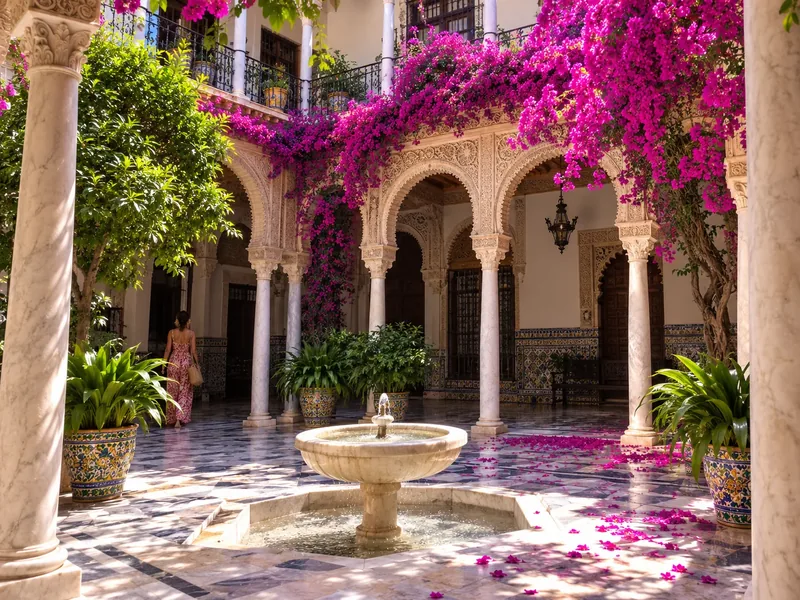
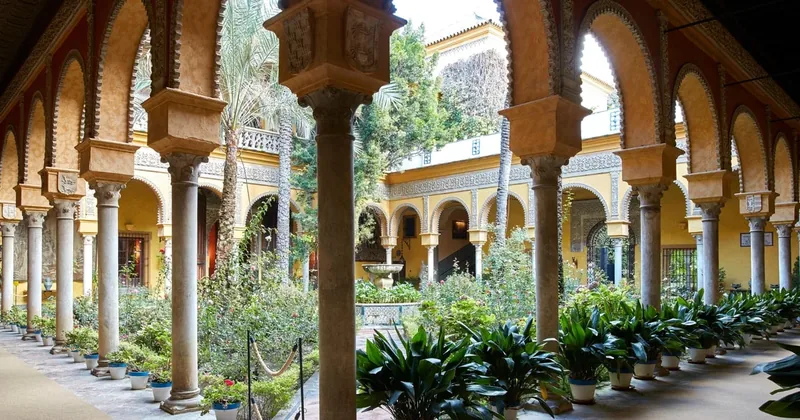
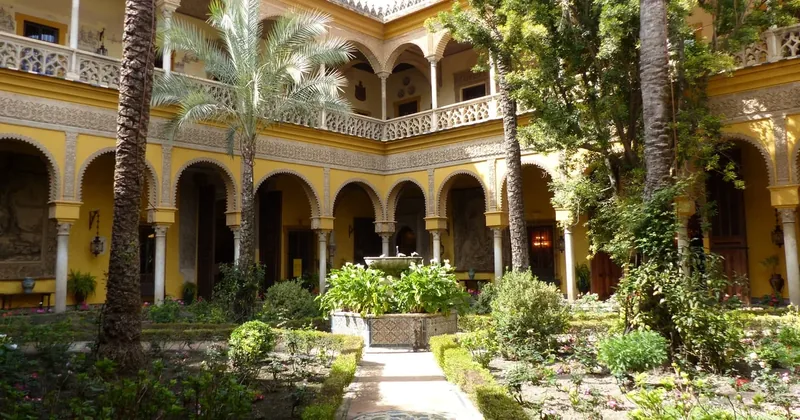
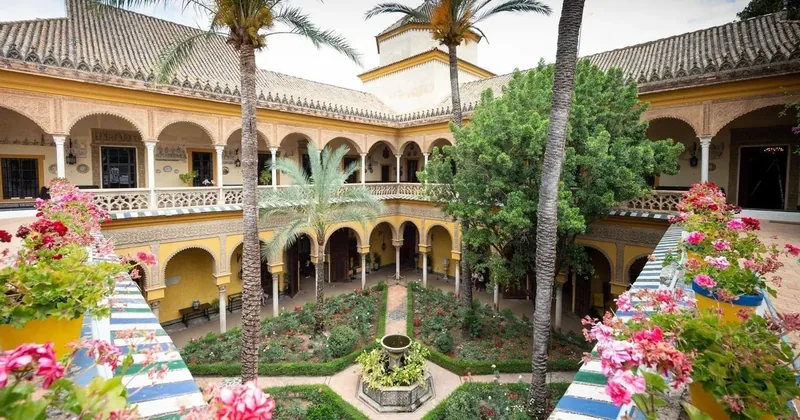
- Main courtyard with marble columns & bougainvillea
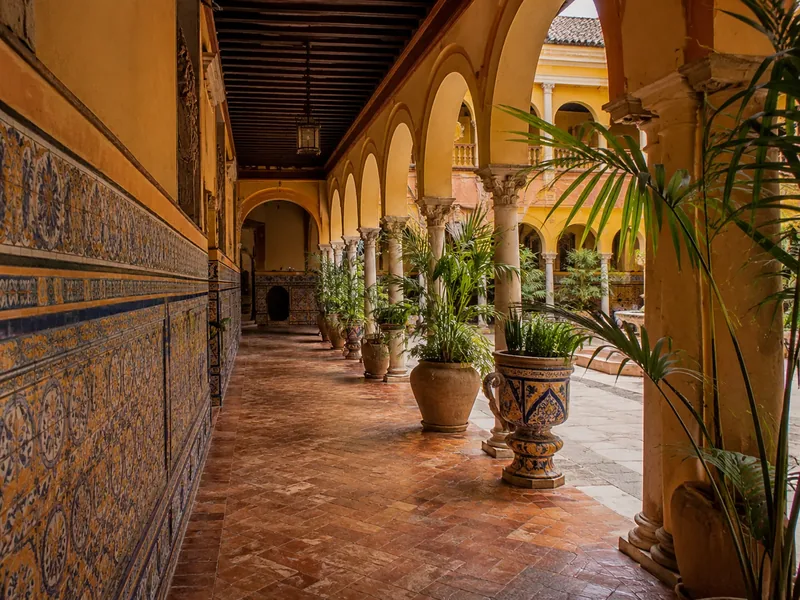
- Arcaded galleries with azulejo tilework
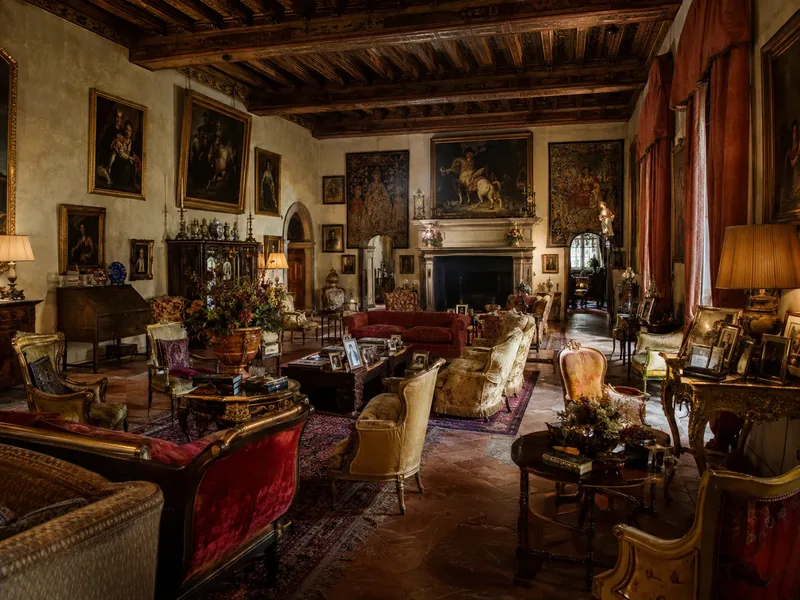
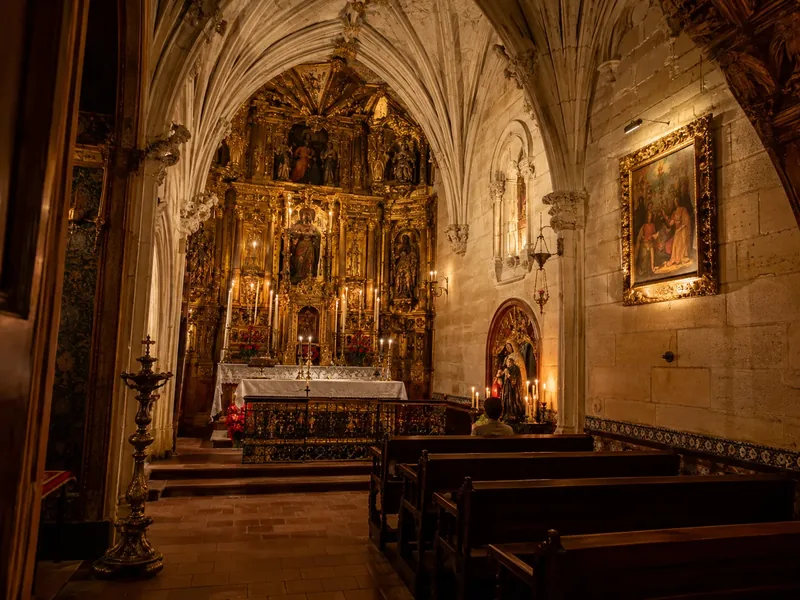
- Chapel and state rooms with the Alba art collection
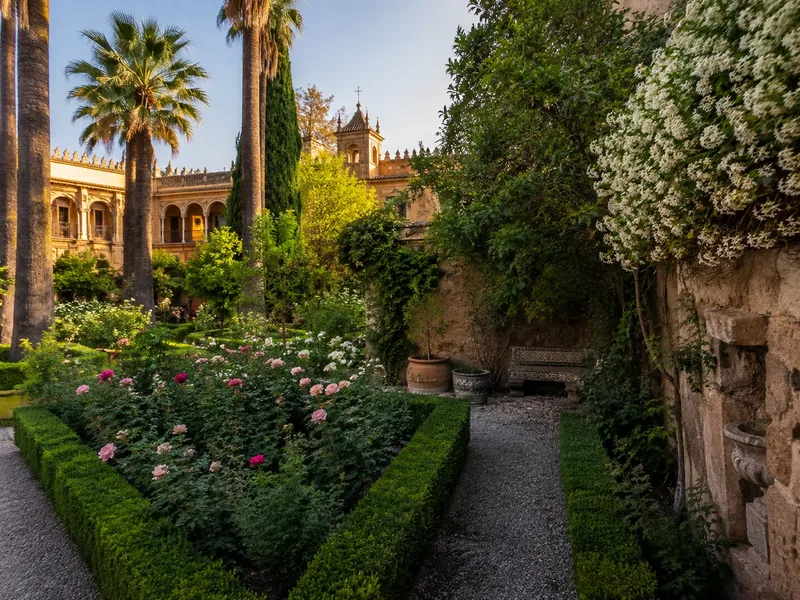
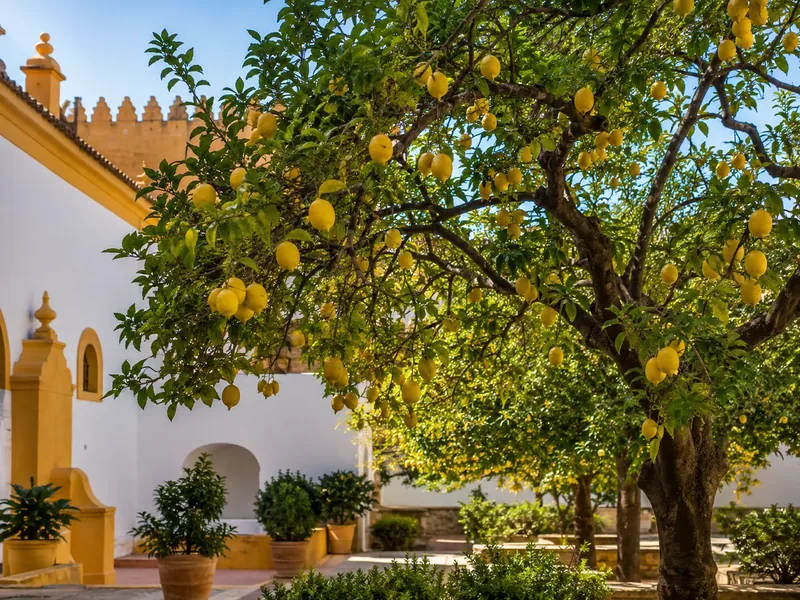
- Gardens & Machado’s lemon tree
What’s included
- Timed QR entry to the ground floor & gardens
- Downloadable app audio guide on your phone
- Self-guided pace — you control the itinerary
- Free cancellation up to 24 hours & instant confirmation
What you see, in order
The self-guided walk through the Palacio de las Dueñas — the courtyards, galleries, rooms and gardens, stop by stop.
A typical 60–90 minute visit starts at the entrance on Calle Dueñas, follows the app audio guide or signage through the palace, and works at your own pace through the ground-floor rooms, galleries and gardens. Most visitors follow a loose loop — there’s no single right way.
- Entrance & first courtyard — You start in the outer courtyard, entry checked at the gate. The main palace rises ahead.
- Main courtyard — Marble columns, bougainvillea, and the visual heart of the palace; the arcaded galleries frame it on four sides.
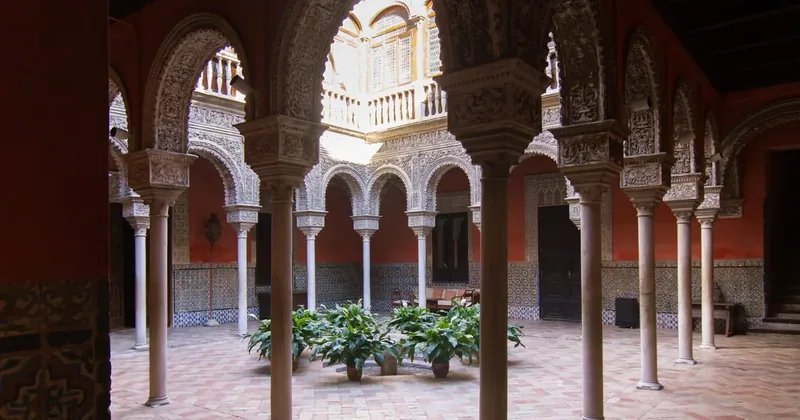
- Arcaded galleries & azulejos — Light-filled corridors with Mudéjar tilework and Renaissance additions; the architectural detail of the palace lives here.
- State rooms & Cayetana’s collection — The ground-floor reception rooms hold paintings, tapestries and memorabilia of the late Duchess Cayetana, who died in this palace in 2014.
- Chapel — The private chapel of the Alba family, preserved and open to visitors as part of the ground-floor route.
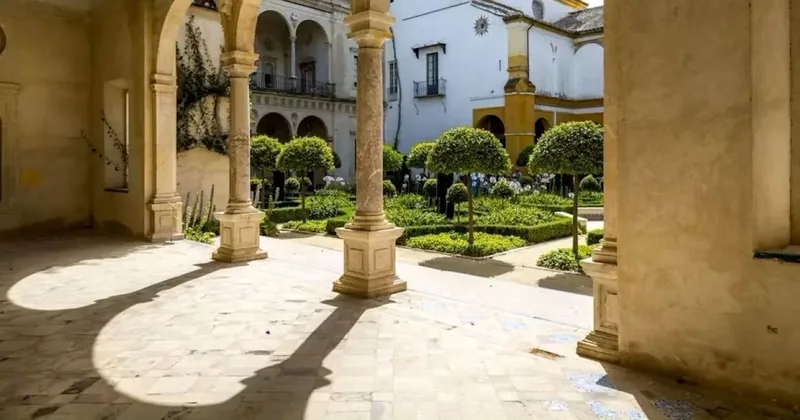
- Gardens & the lemon tree — The grounds are the quiet heart of the visit. The lemon tree in the garden is the one from Antonio Machado’s most-quoted lines.
The whole walk typically takes 60–90 minutes at a proper pace. From here you can continue to read the full room-by-room breakdown or see what’s near the palace.
How booking works
Pick your entry type
Self-guided €15 entry, a guided tour €26, or the two-palace combo €49.
Check real availability
See live dates, times and prices from GetYourGuide.
Book with free cancellation
Instant confirmation with your QR code; most options refund up to 24 hours before.
Just turn up
Your confirmation has the entry time, location and what to bring.
Palacio de las Dueñas entry: €15, app audio guide included
Book a timed slot on GetYourGuide and explore at your own pace with the audio guide on your phone.
Three ways to experience the Palacio de las Dueñas
Self-guided, guided tour, or two-palace combo — how to pick the right fit.
| Most popularLas Dueñas Palace Entry Ticket and App Audio Guide | Palacio de las Dueñas Entry Ticket and Guided Tour | Palacio de las Dueñas & Casa de Pilatos Guided Tour | |
|---|---|---|---|
| Option | Self-guided entry | Guided 1.5-hour tour | Two palaces, 2 hours |
| Price | €15 | €26 | €49 |
| Duration | 60–90 mins | 1.5 hrs | 2 hrs |
| How it works | Your pace, app guide | Guide leads; some Spanish | Skip-the-line both |
| Group size | You control it | Small group | Small group |
| Rating | 4.7★ | 4.4★ | 5.0★ |
| Book this → | View → | View → |
Photo Gallery
The Palacio de las Dueñas through the lens
The courtyards, galleries, gardens and the spaces that make the palace distinct.
All Palacio de las Dueñas tickets & tours
From self-guided entry to guided visits, neighbourhood walks and a premium tour of Seville’s noble houses.
 Best seller
Las Dueñas Palace Entry Ticket and App Audio Guide
 With guide
Palacio de las Dueñas Entry Ticket and Guided Tour
 Two palaces
Palacio de las Dueñas & Casa de Pilatos Guided Tour
 Neighbourhood walk
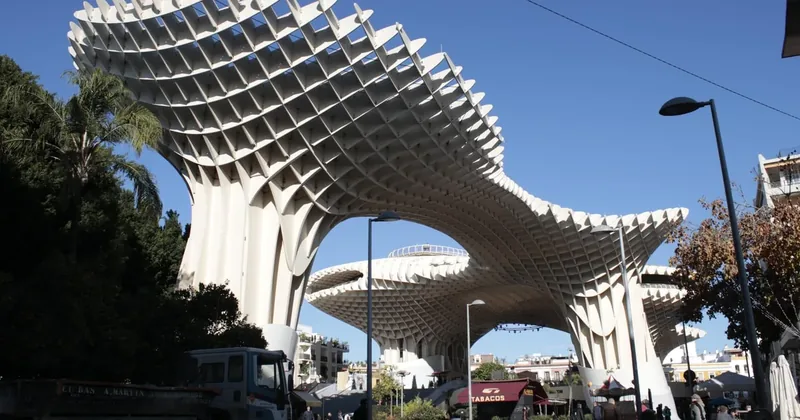
Palacio de las Dueñas, La Macarena & Las Setas Tour
 Small group
Guided Tour of Noble Houses and Grand Gardens
 Add-on palace
Casa de Salinas Entry Ticket with Audio Guide
What guests say about the Palacio de las Dueñas
Real reviews from travellers who booked the experiences we feature.
If you like stunningly manicured gardens this will appeal as much to you as it did to Jackie Kennedy and Cole Porter.
This palace is sublime in terms of architecture and history. Even on my second visit, I am just as amazed.
Great guide, contagious passion for the palace, and the gardens are magnificent.
A place that shows the life of old dynasties, wonderfully relaxing and beautifully kept.
Our guide Héctor was very pleasant and funny. Great anecdotes, very knowledgeable, well worth it.
Wonderful discovery: a peaceful and very beautiful place.
Ratings and reviews are the operators’ live GetYourGuide figures. Read our full tour reviews ›
Quick answers before you book
The essentials so you know what to expect.
How much do tickets cost?
€15 for self-guided entry with app audio guide — same as the gate price, but book on GetYourGuide for instant QR code and free cancellation. Guided tours are €26 for 1.5 hours; two-palace combos €49. Full breakdown of all options and official gate prices.
What day is the palace free?
Every non-holiday Monday from 4pm to closing (last entry 45 minutes before). A €1 booking fee applies; book on the official site lasduenas.es, and know that slots fill up. When free Monday is worth the wait, and when €15 is the better call.
Who lives there now?
The Casa de Alba, the House of Alba. Carlos Fitz-James Stuart, the 19th Duke of Alba, owns the palace and opened it to public visits in 2016. The family still lives in the private floors above. The story of the 18th Duchess Cayetana and why the palace feels like a home.
Can I buy tickets at the entrance?
Yes, €15 at the gate on Calle Dueñas for self-guided entry with audio guide. But booking on GetYourGuide gives you a confirmed timed slot, instant QR code and free cancellation — no queuing. Compare where to buy and when each makes sense.
Is there a guided tour?
Yes. The €26 guided tour (1.5 hours, entry included) is led by a licensed guide who covers the courtyards, galleries and gardens. Some tours run in Spanish — check your slot booking. Compare guided options and languages.
Can I skip the line?
The €49 two-palace combo tour (Dueñas & Casa de Pilatos, 2 hours, one guide) has skip-the-line access at both. It’s a small-group premium tour with only 17 reviews so far. The full details on both palaces and what to check before booking.
What’s the cancellation policy?
Most GetYourGuide options offer free cancellation up to 24 hours before your booked time. Check the specific tour’s terms on the booking page. See the cancellation terms on each product.
How long does a visit take?
60 to 90 minutes for a self-guided visit of the ground-floor rooms, courtyards and gardens. 1.5 hours if you book a guided tour. What to prioritise if you’re short on time.
Can’t make these dates?
Browse more available palacio de las duenas tickets and find one that fits your schedule — all with instant confirmation and free cancellation.
The Palacio de las Dueñas, explained
The Palacio de las Dueñas is not a museum. It is the private home of the House of Alba, one of Spain’s oldest noble families, and the family still lives in it. Built in the late 15th and 16th centuries on Calle Dueñas in Seville’s old town, it is the palace where the poet Antonio Machado was born in 1875. You walk through someone’s house: the late Duchess Cayetana’s favourite residence, the courtyards she loved, the gardens where Machado spent his childhood. That lived-in quality — the sense that this is an inhabited home, not a curated exhibition — is why 4,300+ reviewers rate the €15 entry at 4.7 and why it feels different from other palace visits in Seville.
What the palace actually is
The Palacio de las Dueñas has belonged to the House of Alba since the 17th century. It is a private residence. The Alba family opens the ground floor — the reception rooms, courtyards, galleries, chapel and gardens — to visitors; their private apartments stay closed. You see part of the family’s art collection: paintings, tapestries and antiques acquired over centuries, plus memorabilia of the 18th Duchess Cayetana, who died here in November 2014. The current owner, Carlos Fitz-James Stuart, the 19th Duke of Alba, opened the palace to regular public visits in 2016. When you book a €15 ticket, you’re entering a working home — one that happens to welcome visitors to the ground floor.
The architecture: 15th century, Renaissance, Mudéjar
The palace was built over the late 15th and 16th centuries as a fortified residence in the Gothic-Mudéjar style, with Renaissance additions as the family’s wealth and status grew. The main courtyard — ringed by marble columns and surrounded by bougainvillea — is the visual heart. From it, arcaded galleries with hand-painted azulejo tilework branch out. The state rooms hold the paintings and tapestries. The chapel is one of the ground-floor spaces. The gardens cover about 11,000 m² of grounds; they are the quiet, planted heart of the visit. Visitors rarely see facades — the palace spreads inward. The absence of crowds, the narrow doorways, the sense of moving through lived-in rooms rather than exhibition halls, is what stays with people.
Antonio Machado and the lemon tree
The poet Antonio Machado (1875–1939) was born in the palace on 26 July 1875. His family rented an apartment in one of the palace’s outbuildings, as several families did at the time. His father worked as a private tutor, and the young Machado spent his childhood moving through these courtyards and gardens. His most-quoted lines are about Seville — "Mi infancia son recuerdos de un patio de Sevilla, / y un huerto claro donde madura el limónero" ("My childhood is memories of a courtyard in Seville, and a bright orchard where the lemon tree ripens"). The lemon tree in the gardens is the one he wrote about. A commemorative plaque marks his birthplace. He left Spain in exile in 1939 and died in Collioure, France, a few weeks later. The palace, for him, was the only Seville that mattered.
Cayetana and the 2016 opening
Cayetana Fitz-James Stuart, 18th Duchess of Alba (1926–2014), was the world’s most-titled aristocrat — she held more than a hundred titles across Europe. She made the Palacio de las Dueñas her favourite home. She died here in November 2014. Her son, the current Duke, chose to open the palace to visitors two years later. His decision transformed it from a private estate — glimpsed by locals, documented by historians, off-limits to the public — into a working heritage site. The rooms still hold the Duchess’s collection: her flamenco dresses, photographs, fans and mantillas (the headdresses worn at traditional Spanish processions). Visiting the palace is, in part, walking through her life.
A self-guided visit: the €15 option
A self-guided €15 ticket gives you timed entry and a downloadable app audio guide. The audio is thorough, designed to work at your own pace. A typical visit is 60 to 90 minutes — longer if you linger in the gardens or sit in a courtyard. You enter from Calle Dueñas, usually at the main gate. From there you flow through the palace: the first courtyard, the main courtyard with marble columns, the arcaded galleries with their azulejo tilework, the state rooms holding paintings and tapestries, the chapel, and the gardens. There is no single route — the palace opens itself to your curiosity. The audio guide anchors the experience: each major space has a recorded note explaining its history and what you’re looking at. Most people follow a loose loop and exit near where they entered. The silence and the pace are what visitors remark on. The palace is quiet. Few people visit compared to the Alcázar or the Cathedral. You can sit on a bench in the gardens for twenty minutes and hear only fountains and birds.
Guided tours and the two-palace option
If you prefer a human guide, the €26 guided tour (1.5 hours, entry included) is led by a licensed guide who walks you through the courtyards, galleries and main rooms. Note that some tours run in Spanish; check your booking slot before you pay. For €49, the two-palace combo tour pairs Dueñas with Casa de Pilatos (the Medinaceli family’s palace, a 10-minute walk away, famous for its azulejos). Both palaces were begun by the same family circle in the 15th century — they are cousins in architecture. The combo tour skips the line at both and includes one guide for 2 hours. The reviews note guide Héctor repeatedly — he is knowledgeable and knows the anecdotes. The tour is young (only 17 reviews so far), so read the booking details before committing to check the current itinerary.
When to visit, and how to prepare
The palace is open every day: April to September 10:00–20:00 (last entry 19:15); October to March 10:00–18:00 (last entry 17:15). It is closed on 1 and 6 January and 25 December. Mornings are usually quieter and the light is best for photos. In peak season (April to September), book a day or two ahead for the €15 self-guided option; the €26 and €49 tours have more availability. Bring water, comfortable shoes and a phone for the audio guide. Photography is allowed. The palace has no café, so eat or drink before you go. The site is mostly ground-floor walking — no stairs to the family’s private apartments. Access is flat and paved; it is navigable for most mobility levels, though the palace is old and uneven in places.
Free Mondays: the €1 catch
Every non-holiday Monday from 4pm to closing (last entry 45 minutes before), entry is free. A €1 booking fee applies. You must book online on the official palace site, lasduenas.es. Capacity is limited and slots fill up, sometimes weeks ahead. The free time is genuine — the palace truly offers it — but it is a queue trade-off: book ahead and get a reserved slot, or show up and wait. For most travellers, the €15 booking advantage on GetYourGuide (confirmed time, no queue, free cancellation) outweighs the €15 save on Monday. But if you’re flexible on dates and willing to queue, the free Monday works.
The lived-in palace difference
What sets the Palacio de las Dueñas apart from the Real Alcázar and other Seville palaces is that it remains a home. The Alcázar is the royal palace, far grander, far busier, and consciously a museum. Dueñas is intimate. You walk through rooms that are still used, past decorations that reflect the family’s choices, in silence. The gardens are not staged; they are lived in. That absence of polish, that sense of inhabitation, is what visitors most often remark on in reviews. It is why people return. It is why 4,300+ travellers rate it 4.7 — the same rating as the palace gate price at €15, but with the app guide bundled in.
The bottom line
Book the €15 self-guided ticket on GetYourGuide or at the gate, allow 60 to 90 minutes, bring water and comfortable shoes, and arrive in the morning if you can. If you want a guide, the €26 option is worth it; if you want to combine it with Casa de Pilatos, the €49 combo saves you the walk and the second ticket. Either way, come for the Machado connection or the Cayetana memorabilia or the quiet courtyards. The palace offers all three. But come knowing that you’re walking through someone’s home, not a museum. That is what makes it different.
Frequently asked questions
What is the Palacio de las Dueñas?
The Palacio de las Dueñas is the private home of the House of Alba, one of Spain’s oldest noble families, built in the late 15th and 16th centuries with Gothic-Mudéjar and Renaissance additions. The poet Antonio Machado was born here in 1875. The family still lives in the private floors; visitors see the ground-floor rooms, courtyards and gardens. The story of the Alba family and the 18th Duchess Cayetana, who died in the palace in 2014.
How much does it cost to visit?
€15 for self-guided entry with app audio guide (same as the gate, but book GetYourGuide for instant QR and free cancellation). Guided tours €26; two-palace combo €49; neighbourhood walk €40; premium noble-houses tour €125; Casa de Salinas add-on €12. Full breakdown and official gate prices.
What day is the palace free?
Every non-holiday Monday from 4pm until closing (last entry 45 minutes before). A €1 booking fee applies; you must book on the official palace site lasduenas.es, and slots are limited. How free Monday works and when €15 is actually the better choice.
Who can I go with: self-guided or a guide?
Either works. The €15 self-guided option lets you go at your own pace with the app audio guide on your phone. The €26 guided tour is led by a licensed guide (1.5 hours). Compare guided options, languages and the two-palace €49 combo.
Is it worth visiting instead of the Real Alcázar?
Yes, for different reasons. The Palacio de las Dueñas is a lived-in private palace — it feels like a home — rated 4.7 from 4,300+ reviews. The Real Alcázar is the royal palace, much bigger and busier. The honest case for the Dueñas and how to combine both.
Can I visit Antonio Machado’s birthplace?
Yes. The poet was born in the palace on 26 July 1875 in a rented apartment in one of the outbuildings. A commemorative plaque marks the spot. The lemon tree in the gardens is the one from his most-quoted lines about childhood in Seville. Machado’s connection to the palace and where to see the plaque and tree.
How do I get there?
Calle Dueñas 5, on the edge of the old town between the Setas de Sevilla (Metropol Parasol, ~5 minutes walk) and the Macarena quarter. About 15 minutes on foot from the Cathedral, ~10 from the Alameda de Hércules. No metro stop at the door; it’s a walking city. The full route from the Cathedral, the Setas and transport options.
Still have questions? Email us [email protected]